Yoga in Every Language: Building Language Access So No One Is Left Outside the Room

Yoga in Every Language: Building Language Access So No One Is Left Outside the Room
Picture a woman who walks into a neighborhood studio after a long shift. She has heard that yoga might help her sleep and ease the ache in her lower back. She finds a spot near the door. The teacher begins to speak, quickly and softly, in a language she is still learning. She isn't sure whether "soften your gaze" means close her eyes or look down. She watches the person next to her, copies what she can, and leaves feeling more tense than when she arrived. She doesn't come back.
Nobody in that room was unkind. The teacher was skilled and the studio was welcoming. But the class was built for people who already understood its language, and she couldn't get in.
Yoga talks a great deal about union and inclusion. Language is one of the most practical places to act on those words. This post makes the case for a language-access movement in yoga: multilingual classes, signed and captioned offerings, plain-language teaching, and teachers who come from the communities they serve. It also lays out a roadmap studios, teachers, and training schools can start using now.
Why Language Access Is a Yoga Issue
Yoga's promise is that these tools belong to everyone. In practice, much of the field still assumes a fluent English speaker who can hear the cues and read the waiver. That assumption has costs.
People who could benefit most are often the ones locked out. U.S. Census Bureau data consistently shows tens of millions of people in the country speak a language other than English at home, and roughly one in twelve residents reports limited English proficiency. Many of these neighbors are immigrants and refugees, essential workers, caregivers, and elders. They carry heavy stress loads and often have the least access to wellness resources. A body that has moved across borders and absorbed years of uncertainty is exactly the kind of body that may gain from breath, rest, and gentle movement.
Language access is also a disability access issue. Deaf and hard-of-hearing students, people with auditory processing differences, people with aphasia after a stroke, and people with cognitive disabilities all need instruction that doesn't depend on rapid spoken English. Yoga, which is so physical and visual, is well suited to being taught in many modes. We often just don't do it.
Language is bound up with trust. Health systems have learned that people take part more fully when they can ask questions and give consent in the language they think in. A trauma-sensitive class depends on a student understanding what is being offered, what is optional, and how to opt out. If a student can't follow an invitation, she can't truly accept or decline it.
And language is part of honoring yoga's roots. Yoga came to the world through South Asian languages and cultural traditions: Sanskrit, Pali, Tamil, Hindi, Kannada, and more. A thoughtful language practice means more than adding Spanish cues. It also means pronouncing, explaining, and contextualizing traditional terms with care, instead of treating them as decoration or mispronouncing them for decades.
The Current Gap
Look at the typical yoga landscape and the barriers are easy to see:
- Marketing is English-only. Websites, schedules, social posts, and class descriptions rarely appear in other languages, so many neighbors never learn the studio exists.
- Paperwork is a wall. Waivers, intake forms, and policies are dense legal English. People sign what they can't read, or they don't sign and don't come.
- Class cues rely on idiom. Phrases like "melt your heart," "draw your shoulder blades down your back pockets," and "find your edge" translate poorly, and sometimes alarmingly.
- Teacher training pipelines are narrow. Most 200-hour trainings are offered in English, priced in ways that exclude many working families, and led by teachers who don't reflect the surrounding community.
- Few options exist for Deaf and hard-of-hearing practitioners. ASL-interpreted or ASL-fluent classes are rare, and where they exist, people often travel far to reach them.
- Digital content is under-captioned. Many online classes have no captions, no transcripts, and no translations, even though captioning tools are now cheap and widely available.
None of this comes from bad intent. It comes from habit, from limited time, and from the fact that nobody gave studios a clear, affordable playbook. That is the gap this mission aims to close.
What's Possible: Language Access in Practice
Language access in yoga covers several layers. A studio doesn't need to do everything at once, but it helps to see the whole picture.
1. Multilingual teaching
Classes taught fully in a community's language by a fluent teacher, such as Spanish, Mandarin, Vietnamese, Haitian Creole, Arabic, Somali, Hindi, Punjabi, or whichever languages your neighborhood actually speaks. This is the gold standard because the teacher thinks and improvises in the language rather than translating on the fly.
2. Bilingual and interpreted classes
Where a fluent teacher isn't yet available, a paired model can work: a lead teacher with a volunteer or paid interpreter who offers cues in a second language. Short pauses and plain sentences help both languages breathe.
3. Plain-language and visual teaching
This is the quickest win and helps everyone. Use short sentences and concrete verbs. Demonstrate more and explain less. Name body parts simply. Use picture-based class cards that show each shape, so people can follow without hearing every word.
4. Signed and captioned access
ASL-fluent teachers, interpreted classes, live captioning for online sessions, and captioned recordings. Partnering with local Deaf organizations from the start matters, because Deaf community members should guide this work rather than being served by it.
5. Translated materials
Waivers, intake forms, class descriptions, and safety information in the languages your community speaks, written by people who are actually fluent, ideally reviewed by community members, rather than raw machine output.
6. Careful handling of Sanskrit and traditional terms
Sanskrit isn't a filler vocabulary. A language-access practice includes learning correct pronunciation, offering translations alongside terms, and sharing a little of the history behind them. It also means recognizing that students from South Asian families may bring their own deep knowledge and relationship to these words. Invite them as colleagues and teachers, not as props. (For more on this, see our mission on honoring yoga's roots.)
Principles to Keep Us Honest
Before the roadmap, a few commitments that keep language access from becoming a marketing gesture.
- Nothing about us without us. Work with community leaders, interpreters, and Deaf-led organizations from the earliest planning. Ask what people want rather than guessing.
- Pay for language labor. Interpreters, translators, and bilingual teachers do skilled work. Volunteer help is welcome, but it can't become the default way studios get free labor from immigrant community members.
- Quality over coverage. One class done well in one language beats six languages offered badly. Start with the languages your neighborhood actually speaks.
- Dignity over performance. Don't use "multilingual" as a badge in photos. Do it so the woman by the door can stay.
- Translate meaning, not just words. Cues need cultural adaptation. A warm, familiar tone in one language might feel intrusive or cold in another.
A Roadmap for Studios
If you run a studio, here is a practical sequence that fits a small team and a modest budget.
- Map your neighborhood's languages. Look at local school district data, public library language programs, and census tables for your area. Talk with a few neighbors, faith leaders, and community organizers. Pick one or two priority languages.
- Audit your own front door. Read your website, waiver, signage, and class descriptions as if you were a new arrival who reads little English. Where do you get lost?
- Translate the essentials first. Start with a welcome message, class schedule, a short "what to expect" guide, and a plain-language waiver and consent form. Pay a professional translator or a community-recommended bilingual reviewer.
- Pilot one class. Pick an existing slot and try a bilingual or fully translated class for eight weeks. Make it free or sliding scale during the pilot so cost isn't a second barrier.
- Partner for trust. Co-host with a community center, school, clinic, faith group, or immigrant services organization that already has relationships. Their staff can introduce the class to people who would never find a yoga website.
- Train your whole team. Teach front-desk staff a few greeting phrases and how to reach interpreter help. Practice plain-language cueing in team meetings.
- Caption everything online. Turn on automatic captions for live and recorded classes, then correct them. Post transcripts where you can.
- Gather feedback and adjust. Ask students what worked. Offer a simple feedback card in their language, and listen without defensiveness.
A Roadmap for Teachers
You don't need to be fluent in five languages to make your classes more accessible.
- Learn plain-language cueing. Replace metaphor with direct instruction when someone is new to the language. "Lift your arms" is clearer than "reach for the sky."
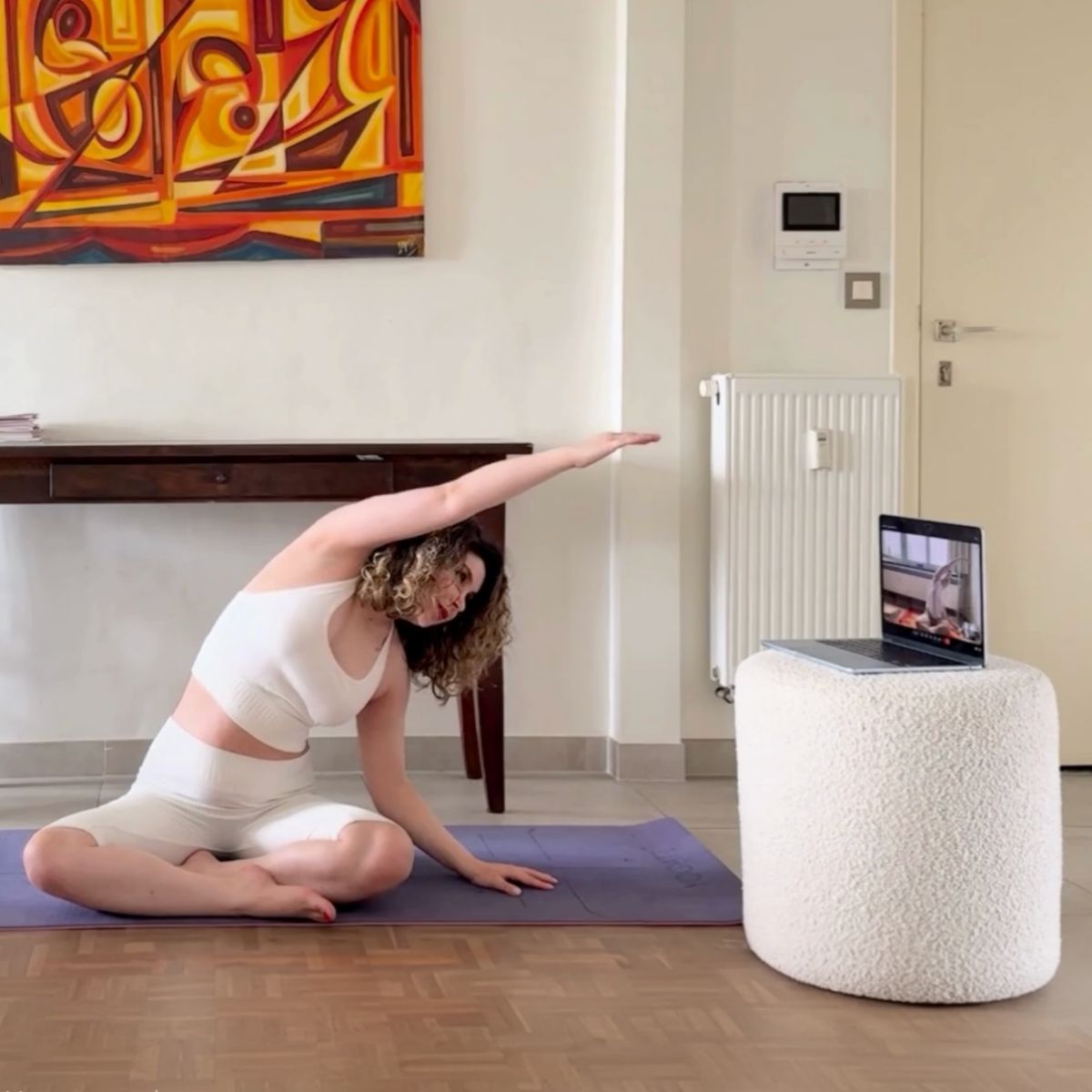
- Build a visual toolkit. Printed pose cards, simple demonstrations, and consistent hand signals help everybody, including those who struggle to hear.
- Learn the key phrases of your students' language. Greetings, "slowly," "rest," "stop if it hurts," and "you can skip this." Ask students to teach you. It builds relationship.
- Practice Sanskrit with humility. Study pronunciation with a qualified teacher, share meanings, and credit the traditions the words come from.
- Consider becoming a bilingual teacher. If you speak another language, you may be exactly who a community is waiting for. Seek out training and mentorship, and consider offering classes in that language. Browse yoga teachers on YFN to connect with colleagues who teach in multiple languages.
- Know your limits. If your language skills are partial, say so, and bring in a fluent colleague for sensitive topics like trauma-informed consent.
A Roadmap for Training Schools
Teacher training is where long-term change gets built. Schools can:
- Add a language-access module to the core curriculum covering plain-language cueing, working with interpreters, captioning, and inclusive paperwork.
- Offer trainings in additional languages, or partner with another school to co-deliver them.
- Create scholarships and reduced-cost seats for bilingual candidates and for Deaf and hard-of-hearing trainees.
- Recruit trainers who reflect the communities served, and pay them fairly.
- Teach Sanskrit pronunciation and context as a core skill, ideally with South Asian scholars and teachers involved in curriculum design.
Schools interested in leading on this can list their programs in the YFN yoga school directory.
What the Network Can Do Together
Individual studios can only go so far, and the work is easier and cheaper when it's shared. Here is where a network like ours can add value.
- A shared translation library. Open-licensed templates for waivers, intake forms, welcome guides, and "what to expect" handouts in the ten most commonly needed languages, each reviewed by fluent community members.
- A multilingual teacher registry. Directory filters so people can search for classes by language, ASL access, and captioning, and so studios can find bilingual teachers to hire.
- An interpreter and translator exchange. A vetted list of paid interpreters and Deaf community partners who understand yoga contexts.
- Cueing guides. Plain-language and culturally adapted cue banks developed with teachers fluent in each language, not machine translated.
- Workshops and peer learning. Regular sessions on language access, plain-language teaching, and working with interpreters. Look for upcoming offerings through YFN workshops.
- Small grants. Seed funding for studios piloting their first language-access class or captioning workflow.
- Shared measurement. Simple data points such as number of languages offered, students reached, and retention rates, so we can learn what works.
Common Pitfalls (and How to Avoid Them)
- Relying only on machine translation. It is a decent first draft and a poor final product, especially for consent and safety language. Always have a fluent human review.
- Tokenizing a few community members. Don't ask your one bilingual student to translate everything for free. Compensate people, and respect their choice to decline.
- Offering a class and expecting people to come. Trust grows through partners and repeated presence. Plan for months, not weeks.
- Ignoring dialect and cultural differences. Spanish in Mexico City differs from Spanish in San Juan, and Arabic varies widely by region. Ask your community.
- Treating Sanskrit as the only "authentic" language of yoga. Honor the roots, and also let people practice in the language of their hearts. Both can be true.
- Forgetting cost and location. A perfectly translated class at an unaffordable price in a distant neighborhood is still inaccessible.
Where to Start
You don't have to launch a multilingual studio next week. Here is a realistic 90-day path.
Days 1–30: Listen and look.
- Identify the top two languages in your neighborhood.
- Audit your website, waiver, and signage.
- Have three conversations with community organizations.
Days 31–60: Build the basics.
- Translate your welcome message, schedule, and consent form with a paid, fluent reviewer.
- Turn on captions for any online classes.
- Practice plain-language cueing with your team.
Days 61–90: Pilot and learn.
- Launch one bilingual or translated class, free or sliding scale.
- Collect feedback in participants' language.
- Share what you learned with the network so others don't start from zero.
How You Can Help
- Studio owners: Commit to one translated class and one translated document this quarter. List your space and the languages you offer in the YFN studio directory.
- Teachers: Tell us which languages you teach in, or which you'd like to learn. Offer a bilingual class or volunteer to review translations.
- Bilingual practitioners and interpreters: Your skills are valuable. Consider joining as a paid reviewer or cue-bank contributor.
- Deaf and hard-of-hearing practitioners and advocates: Share your expertise and help us build access the right way.
- Everyone: Share this post with a studio owner who has been wondering how to reach their neighbors.
Key Takeaways
- Language is one of the most concrete barriers between people and yoga's benefits, and one of the most fixable.
- Language access includes spoken languages, ASL and captioning, plain-language cueing, translated materials, and respectful handling of Sanskrit.
- Start with your neighborhood's actual languages, and partner with trusted community organizations from day one.
- Pay interpreters, translators, and bilingual teachers fairly, and involve community members as leaders.
- Quality beats quantity: a single well-run class in one language is a stronger foundation than many shallow gestures.
- A shared network library of translations, cue banks, and teacher listings can make this work cheaper and faster for everyone.
- Honoring yoga's South Asian roots and making yoga accessible in every language are complementary commitments.
Join the Movement
Somewhere in your neighborhood is someone standing at the door of a yoga room, unsure whether it was made for them. Language access is how we show them it was.
If you run a studio, teach, or train teachers, join Yoga Founders Network and help us build the tools, translations, and relationships that make yoga available in every language. List your space, share your languages, and bring a colleague with you. The practice has always been for everyone, and we can help make sure everyone can understand the invitation.