Yoga at the Community Health Center: Building Group-Visit Programs for the Patients Big Hospitals Miss

Yoga at the Community Health Center: Building Group-Visit Programs for the Patients Big Hospitals Miss
Picture a Tuesday afternoon at a neighborhood health clinic. The waiting room is full. A woman in her fifties has come in for the third time this year with back pain and a blood pressure reading that keeps creeping up. A young father is there for a diabetes check, and he hasn't slept properly since his hours were cut. A teenager sits beside her mother, quiet and tense, waiting for a counselor who has a six-week backlog.
Each of these people will get a fifteen-minute appointment, a prescription or a referral, and a handout. Most of them will not get what might help just as much: a regular, supportive, skillful practice of moving, breathing, and resting, done alongside other people who share their circumstances.
This is the gap we want to close. Over the past few years our community has built a strong case for yoga in hospitals and clinical referral. This post makes the case for a different, more grounded door: the community health center, where millions of people receive their everyday care, and where yoga could do the most good.
Why community health centers are the right door
In the United States, community health centers, including federally qualified health centers (FQHCs), serve more than 30 million people. They are located in or near the neighborhoods that most need them: urban areas with high poverty, rural counties with few other providers, communities where many patients are uninsured, on Medicaid, or newly arrived. Most use a sliding-fee model, so cost is not the barrier it is elsewhere. Many offer integrated behavioral health, case management, and community health workers.
That makes them different from the hospital systems we have written about before, in four ways that matter for yoga:
- They already serve the people we say we want to reach. Our field often talks about reaching underserved communities. Health centers are where those communities already show up, trusted and on a regular schedule.
- They are built around prevention and chronic conditions. Hypertension, diabetes, chronic pain, anxiety, depression, and trauma-related distress make up much of their daily work. These are the conditions where there is the strongest evidence that movement, breath, and stress-regulation practices help.
- They are open to group models. Shared medical appointments, also called group visits, are a familiar format in primary care. A yoga-informed group visit fits into a structure clinicians already understand.
- They are mission-driven. Many health centers are governed by boards that include patients. Their leaders are often looking for low-cost, community-rooted ways to improve outcomes and reduce the burden on stretched staff.
None of this means yoga replaces medical care. It means yoga can sit beside it, as one more support that a patient and a clinician can choose together.
What we know, and what we should be honest about
A credible mission has to be careful with claims. Here is where the evidence stands, as we understand it:
- For chronic low back pain, yoga appears in clinical guidance, including the American College of Physicians' 2017 recommendation to try non-drug approaches first, among them yoga, tai chi, mindfulness-based stress reduction, and exercise therapy.
- For anxiety, depression, and stress, a growing body of trials suggests yoga can help as a complement to standard care, though study quality varies and effects differ by population and program design.
- For blood pressure, blood sugar, and cardiovascular risk, results are promising but mixed. Yoga is best positioned as a supportive lifestyle practice rather than a standalone treatment.
- For trauma-related symptoms, trauma-informed yoga has early positive findings, especially when delivered by specially trained teachers and designed around choice and agency.
What is thin is research done in community health settings, with the populations those settings serve. Much of the existing literature draws on small samples that are not representative of the patients in a federally funded clinic. That is not a reason to wait. It is a reason to build programs that collect good data from the start, so that the next round of evidence reflects the people who need it.
The current gap
Most yoga that reaches clinics today reaches them by accident. A teacher volunteers on their own. A grant funds twelve sessions, and then the funding ends. A clinician who loves yoga starts an informal class and then changes jobs. Without structure, these efforts fade.
The recurring problems:
- No shared model. Every teacher invents the program from scratch, and every clinic reinvents what "yoga for patients" should look like.
- A training mismatch. A 200-hour certification does not usually prepare someone to teach a room of patients with hypertension, chronic pain, limited English, and past medical trauma. Clinics are right to be cautious.
- Weak integration. Classes often run in a back room, disconnected from the care team. Clinicians don't know what is being taught, so they don't refer.
- Unstable funding. Short-term grants pay for pilots, not programs.
- No data. Without outcomes, a program can't make the case for its own continuation.
- Cultural distance. Yoga's image as expensive, thin, and wealthy can make patients feel the practice is not for them. Its roots in South Asian philosophy and healing traditions are rarely taught, and patients from those communities are often overlooked as well.
What is possible: a yoga group-visit model
Imagine a standard, adaptable program that any health center could adopt with the help of local teachers and studios. A strong model might look like this.
A cohort, not a drop-in
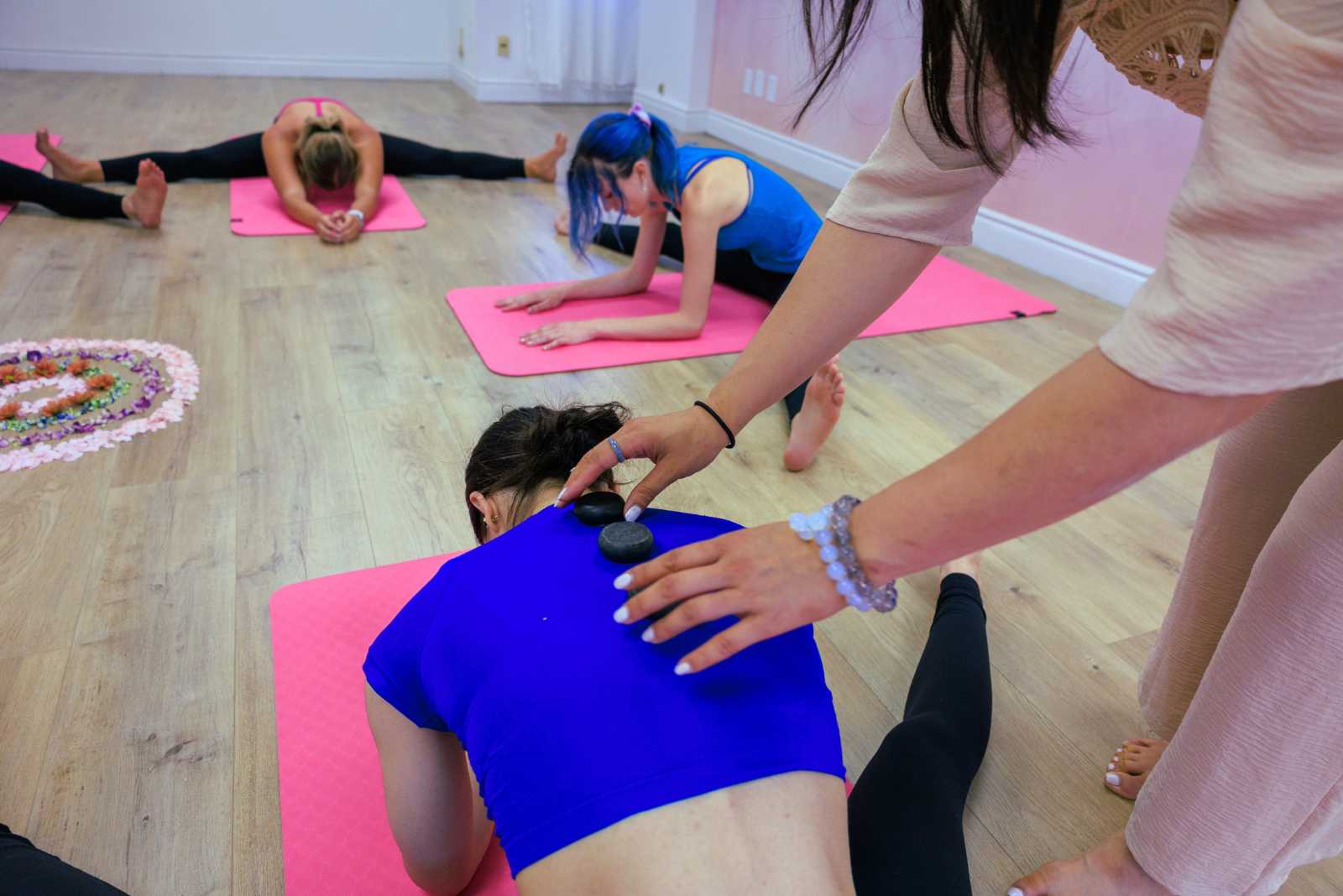
A group of eight to fifteen patients meets weekly for eight to twelve weeks, led by a trained teacher and, ideally, co-facilitated by a clinician or community health worker. A cohort builds trust and social connection, which are often as therapeutic as the movement itself. Isolation is a health risk, and a regular group is a protective factor.
A simple, repeatable structure
Each 60–75 minute session might include:
- A short check-in and a brief educational moment (for example, how the stress response works, or how breath affects heart rate)
- Gentle, adaptable movement, mostly chair-based or floor-based, with options for every body
- Breathing practices and guided rest
- A closing circle, with a take-home practice of five minutes or less
The structure can be shared across sites, while the details, language, music, and examples are shaped by the community.
Trauma-informed and accessible by design
Invitational language. Choice at every moment. No hands-on adjustments without consent. Eyes open or closed, as the participant prefers. Chairs, bolsters, and walls as standard equipment, not "modifications." These are not extras. They are the basic conditions that make a clinic-based yoga class safe.
Linked to the care team
The clinic's providers know the program exists, understand what is taught, and can refer patients with a simple form. A patient's participation can be noted in the chart. The teacher knows what to do when someone is in distress, and who to call.
Culturally and linguistically responsive
Classes offered in the languages patients speak. Interpreters or bilingual teachers. Imagery that reflects the community. And honest teaching about where these practices come from: that yoga is a South Asian tradition of ethics, breath, meditation, and movement, not merely a fitness format. Teaching the roots with respect is part of treating patients as whole people. Inviting South Asian teachers and elders into design and leadership, and paying them fairly, is part of honoring it.
Where the money can come from
Funding is the question that kills most programs, so let's be specific.
- Health center operating budgets and behavioral health lines. Group visits can sometimes be integrated into existing services, particularly where programs are framed as stress management, chronic disease self-management, or behavioral health support.
- State and local public health grants. Departments of health often fund chronic disease prevention, maternal health, and mental health programs. Yoga can be one delivery method.
- Medicaid and managed care innovation. Some states and health plans have opened pathways to cover health-related social needs and community-based services. The landscape varies, changes often, and is worth tracking with a local health policy partner.
- Hospital community benefit dollars. Nonprofit hospitals are required to invest in community health. Partnerships with the health centers they work alongside are a natural fit.
- Foundations and the network's own grant fund. Seed funding can cover teacher pay, training, and evaluation for a first cohort.
- Participating studios. Studios can donate space, equipment, and teacher hours, or run a "sponsor a cohort" campaign among their members.
One principle should hold throughout: teachers are paid for this work. Volunteer-only models are fragile and perpetuate the idea that teaching in community settings is charity rather than skilled labor.
Training the people who will lead it
The biggest bottleneck is not interest. It is qualified teachers who are ready for a clinical setting. A solid training pathway for clinic-based teaching should cover:
- Trauma-informed teaching and the basics of nervous system regulation
- Adaptive and chair-based practice for chronic conditions, limited mobility, and pain
- Scope of practice: what a yoga teacher can and cannot say about diagnosis, medication, and treatment
- Health privacy, documentation, and working within a clinical team
- Cultural humility and language access
- Boundaries, self-care, and avoiding vicarious burnout
- Basic data collection and program evaluation
The teachers best suited to this work often come from the communities being served. Scholarships, paid apprenticeships, and mentorship from experienced clinical-setting teachers can make this a career pathway, not just a volunteer opportunity. Teachers can explore yoga teachers who already work in community and therapeutic settings, and studios can host workshops to start building this skill set locally.
How to measure it so the program survives
If you cannot show results, a clinic can't justify keeping you. Keep the measurement light, respectful, and meaningful to patients and clinicians alike:
- Participation: enrollment, attendance, completion rate, and demographics
- Patient-reported measures: perceived stress, sleep, pain interference, mood, and a simple "how connected do you feel" question, collected at the beginning, the end, and perhaps three months later
- Clinical markers where appropriate: blood pressure, for example, tracked with the clinic's own data and with patient consent
- Qualitative stories: short, consented patient reflections that give the numbers a human face
- Experience of the care team: do clinicians feel the program helps?
Use consistent tools across sites so results can be pooled. A shared dataset from ten health centers tells a far stronger story than ten separate anecdotes, and it creates the evidence base researchers need.
Where to start
If you own or run a studio
- Map your local health centers. Search for the community health centers and clinics near you. Find out who leads behavioral health or community programs.
- Offer a conversation, not a pitch. Ask what patients struggle with and what the clinic wishes it could offer.
- Propose a small pilot. One cohort, one site, eight weeks, with clear measures and a defined review date.
- Donate what you have. Props, mats, bolsters, and a trained teacher's time can lower the barrier for a first pilot.
- Plan for after the pilot. Before it begins, agree on what happens if it works.
If you are a teacher
- Build your skills. Take training in trauma-informed and adaptive teaching, and get comfortable with chair yoga.
- Learn the language of clinics. Understand terms like behavioral health integration, group visits, and chronic disease self-management.
- Partner with a clinician. A nurse, social worker, or physician ally is the strongest way into a clinic.
- Ask to be paid. Name a fair rate, and help the clinic find the funding.
If you are a practitioner or patient
- Tell your clinic what you'd value. Patient requests carry weight, especially through patient advisory boards.
- Share your story, if you're comfortable, with a clinic manager or a board member.
- Support local studios that run community cohorts.
What the network can do
- Publish an open-source group-visit toolkit with session outlines, safety protocols, consent language, and sample evaluation forms
- Offer a train-the-teacher program specifically for clinic settings
- Match studios with nearby health centers and provide template partnership agreements
- Pool outcome data across sites, with strict privacy standards, and share the findings openly
- Advocate with state agencies and payers for sustainable funding for community-based movement and mindfulness programs
Guardrails: how we do this well
Good intentions can still cause harm. A few commitments should travel with every program:
- Do no harm. Teachers stay in scope, refer out when needed, and never imply that yoga replaces medication or treatment.
- Center patient voice. Patients help design and review the program. They are partners, not subjects.
- Protect privacy. Data is collected with consent, stored securely, and used to improve programs.
- Avoid savior dynamics. We are guests in these communities. We listen first and stay accountable.
- Honor the lineage. We teach yoga as the rich, multi-layered South Asian tradition it is, and we credit and compensate the teachers and communities who carry it.
- Plan for sustainability. A program that disappears when the grant ends can leave patients feeling more abandoned than before.
A vision worth building
Imagine five years from now. In hundreds of neighborhoods, a patient leaving the doctor's office isn't only handed a prescription or a pamphlet. She's invited to a Thursday-evening group where she will sit in a chair, breathe, stretch, laugh a bit, and meet others who know what she's carrying. Her blood pressure is a little lower. Her pain is a little less loud. She sleeps a bit better. And she has people.
That is not a fantasy. It is a matter of design, funding, training, and the will to show up in the places yoga has too rarely gone.
Key Takeaways
- Community health centers serve more than 30 million people, many of them low-income, uninsured, or on Medicaid. They are among the best doors for yoga to reach the people who most need it.
- Group visits are a natural fit. A cohort-based, 8–12 week model builds both physical benefit and social connection.
- Evidence is promising but incomplete, particularly for chronic back pain and stress-related conditions. Honest framing and built-in measurement will strengthen it.
- Training matters. Teachers need trauma-informed, adaptive, and scope-of-practice skills, along with cultural humility, before entering clinical spaces.
- Pay teachers and plan for sustainability. Funding should come from diverse sources, with a plan beyond the pilot.
- Honor yoga's South Asian roots and include community voices in leadership and design.
- Start small: one clinic, one cohort, one clear set of measures.
Join the Movement
The next chapter of yoga's impact will be written not only in studios, but in the clinics, waiting rooms, and community rooms where people are already seeking help. If you run a studio, list your space with Yoga Founders Network and tell us you're ready to partner with a local health center. If you teach, add your profile and note your training in trauma-informed or adaptive teaching, so clinics and studios can find you. And if this vision speaks to you, share it with a clinician, a studio owner, or a friend on a health center board. The movement starts with a single conversation.