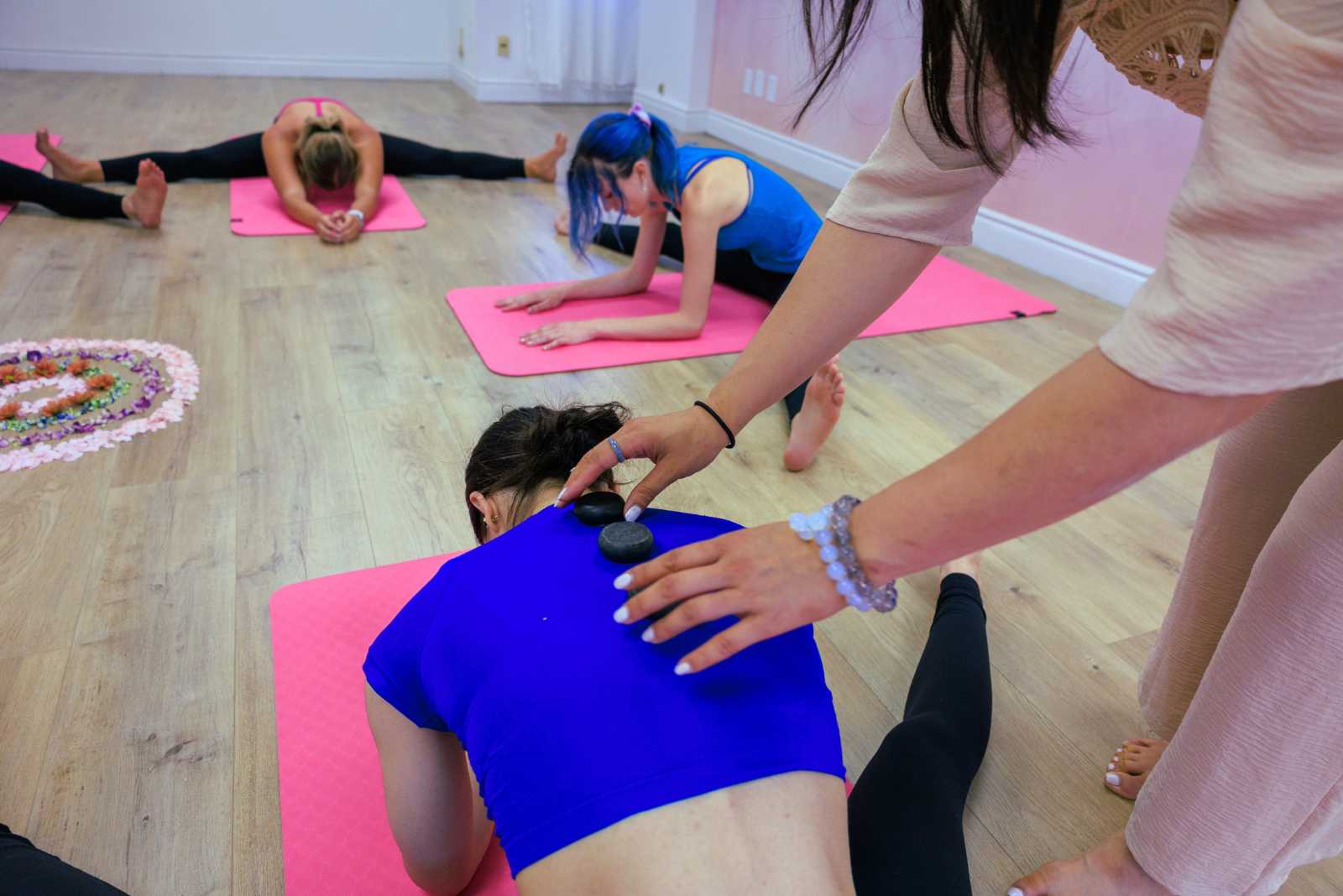
Yoga Through the Change: Building Perimenopause and Menopause Programs That Meet People Where Medicine and Culture Fall Silent

Yoga Through the Change: Building Perimenopause and Menopause Programs That Meet People Where Medicine and Culture Fall Silent
Somewhere around the age of forty-five, many people's sleep starts to fray. Their moods shift in ways they don't recognize. Their joints ache, their memory slips, their heart races at 3 a.m. for no reason they can name. They may go to a doctor and hear "it's stress." They may search online and find a swamp of supplement ads and fear. Often they tell no one, because no one told them this was coming.
This is perimenopause, and then menopause: a transition that touches roughly half the population, lasts years, and is still treated by much of our culture as a punchline or a private embarrassment. For a field that says it cares about the nervous system, the body across the lifespan, and community as medicine, this is an enormous opening.
This post makes the case for a specific mission: yoga studios, teachers, and community organizations building dedicated, honest, medically-aware programs that support people through perimenopause and menopause. Not a cure. Not an anti-aging pitch. A place to be informed, steadied, and accompanied.
Why This Matters Now
Menopause is not a niche concern. In the United States, well over a million people reach menopause each year, and the average age is around 51. Perimenopause, the transition leading up to it, can begin in the early-to-mid forties and last several years, sometimes a decade. Globally, hundreds of millions of people are in or beyond this transition at any given time, and the number keeps growing as populations age.
Symptoms vary widely, and no two experiences are identical. Commonly reported ones include:
- Hot flashes and night sweats
- Disrupted sleep and insomnia
- Anxiety, low mood, irritability, or a sense of "not feeling like myself"
- Brain fog and difficulty concentrating
- Joint and muscle pain, and changes in bone density
- Changes in the pelvic floor, bladder, and sexual comfort
- Heart palpitations, headaches, and shifts in energy
Meanwhile, the support system is thin. Many clinicians receive very little training in menopause care. Appointments are short. Many people are dismissed, misdiagnosed with depression alone, or left to navigate conflicting information about hormone therapy by themselves. Workplaces rarely have a vocabulary for it. Families often don't either.
The result is isolation at exactly the moment when people are often carrying the most: careers at their peak, teenagers at home, aging parents, grief, and, for many, the sense that their body has become unfamiliar.
The Gap Yoga Can Fill, and the Gap It Can't
Let's be clear and honest, because trust is our most valuable asset.
What yoga can reasonably offer:
- Nervous system regulation. Breathwork, slow movement, and rest practices can help people feel more settled in a body that is suddenly less predictable.
- Sleep support. Evening practices and consistent routines can help with the sleep disruption many people experience.
- Strength and mobility. Weight-bearing and strength-oriented practice supports muscles, balance, and bones as part of a broader approach to health.
- Pelvic floor awareness. Informed teaching can help people understand when to release and when to strengthen, and when to refer to a specialist.
- Community and language. Perhaps the most underrated benefit: sitting in a room of peers who say "me too."
What the research says, honestly: Studies of yoga for menopausal symptoms are generally small and vary in quality. Several reviews suggest benefits for quality of life, mood, anxiety, and sleep. Evidence for reducing hot flashes specifically is mixed and less convincing. That doesn't make yoga useless. It means we should describe it accurately: a supportive, low-risk practice that helps many people cope and feel better, not a treatment for hot flashes or a substitute for medical care. (This is one more reason the field needs to keep building its evidence base, which we've written about in our post on research.)
What yoga can't and shouldn't do:
- Diagnose perimenopause or menopause
- Advise on hormone therapy, supplements, or medications
- Promise to "balance hormones" or "reverse aging"
- Replace evaluation for heavy bleeding, severe mood changes, chest symptoms, or other things that warrant a clinician
Programs that stay within this honest lane will build credibility with the medical community and with participants who are tired of being sold miracles.
Rooted Practice, Honest Framing
Yoga's South Asian lineage offers rich resources for a life-stage transition: practices of steadiness (sthira) and ease (sukha), breath-centered regulation, restorative rest, contemplative inquiry, and a view of life as a series of changes to be met with awareness rather than fought against. These are worth teaching with attribution and respect.
We should also be careful not to invent a fake ancient "menopause yoga" or claim traditional texts prescribed particular sequences for this transition. They didn't. The honest framing is that we are drawing on a living tradition and applying it thoughtfully to a modern need, with current knowledge about physiology. That framing honors the roots and the participants at once.
What an Excellent Midlife Program Looks Like
A strong program is more than a "gentle class for women of a certain age." Here are the elements worth building in.
1. Education alongside practice
Open each session or series with ten minutes of plain-language information, ideally with a guest from healthcare: a menopause-informed physician, nurse practitioner, or pelvic floor physical therapist. People often leave saying the most valuable part was simply learning what's normal and what's worth raising with their doctor.
2. A menu of practices, not one sequence
Offer variety, because needs fluctuate week to week:
- Down-regulating practices: long-exhale breathing, supported restorative poses, yoga nidra
- Strength-building practices: standing work, loaded movement, balance, with attention to bone health
- Cooling practices: slower pacing, open windows, fans, and permission to leave the room or remove layers without comment
- Pelvic-floor-aware classes: taught by teachers with specific training
3. Environment that respects symptoms
Small details signal care: adjustable temperature, cold water and cloths available, chairs and bolsters, bathroom access, and no pressure around heat. Avoid hot-room formats as the default for this program, as heat can aggravate symptoms for many people.
4. Peer circles
Build in time to talk. A tea circle after class or a monthly discussion group changes the program from fitness to belonging. Facilitators should be trained to hold the space, with clear boundaries about not offering medical advice.
5. Clear referral pathways
Every teacher should know where to send someone: local menopause clinicians, pelvic floor therapists, mental health providers, and crisis resources. When a participant describes persistent low mood, thoughts of self-harm, or alarming physical symptoms, the teacher's job is to respond with care and connect them to qualified help.
Who Gets Left Out, and How to Include Them
The default image of menopause is a white, cisgender, middle-class professional. Reality is broader, and the mission only works if our programs reflect it.
- Women of color and immigrant communities. Research and clinical care have historically under-represented them, and experiences and symptom patterns can differ. Menopause may be spoken of differently, or not at all, in different cultures. Hire teachers from these communities, offer programs in multiple languages, and hold sessions in trusted community spaces.
- Trans men, nonbinary, and gender-diverse people. Many experience menopause naturally, through surgery, or through changes in hormone treatment. Use inclusive language ("people going through menopause") and make clear everyone is welcome.
- People in surgical, medical, or early menopause. Cancer treatment, oophorectomy, and primary ovarian insufficiency can trigger abrupt menopause, often decades earlier than expected and with intense symptoms. These participants may be grieving as well as adjusting. Connect with our approach to cancer recovery programming and grief support.
- Low-income and shift-working people. The ones who most need support often can't attend a Tuesday 10 a.m. class at $25. Offer sliding scale, evening and weekend options, online sessions, and partnerships with community centers and employers.
- People with disabilities and chronic illness. Chair-based and fully adaptive options should be a foundation, not an add-on.
Building the Partnerships
No studio should do this alone. The strongest programs sit inside a web of relationships.
- Menopause-informed clinicians and clinics. Invite them to speak, co-design education, and refer in both directions. Offer a simple, one-page overview of your program they can hand to patients.
- Pelvic floor physical therapists. They're natural allies. Many people need their care, and a good yoga teacher can reinforce it.
- Employers and HR teams. More workplaces are beginning to create menopause-friendly policies. Yoga programs can be part of a package alongside flexible hours, temperature control, and manager education. Look for opportunities to partner on lunchtime series and lunch-and-learns.
- Libraries, community centers, and faith communities. Free or low-cost sessions in these trusted spaces reach people who never walk into a boutique studio.
- Local women's health organizations and advocacy groups. They can amplify your work and help you reach the underserved.
Training Teachers to Do This Well
Most 200-hour trainings include little or nothing on midlife physiology. That should change. A solid continuing-education pathway for teachers would cover:
- Perimenopause and menopause basics: the hormonal shifts, common symptoms, and the wide range of normal
- Bone health and strength: safe, effective loading and balance work
- Pelvic floor fundamentals: when to release, when to strengthen, when to refer
- Sleep and nervous system regulation: evidence-informed practices and their limits
- Scope of practice: what to say, what never to say, and how to refer
- Trauma-informed and inclusive facilitation: because midlife often arrives with unprocessed history, and because the room must be safe for all genders and cultures
- Language that respects: moving away from anti-aging framing and toward strength, steadiness, and self-trust
Teachers in this age group are themselves often in the transition. Their lived experience is an asset, as long as they pair it with training and don't present their personal story as clinical authority.
Avoiding the Common Pitfalls
- Wellness hype. Don't partner with brands making hormone-balancing claims. Our credibility is worth more than a sponsorship.
- Anti-aging language. Aging isn't a problem to be solved. Frame programs around capacity, comfort, and community.
- A one-size program. Symptoms differ. Offer options and let people choose.
- Silence about money. If your program serves only those who can pay premium prices, you've missed the point of the mission.
- Skipping evaluation. Track attendance, collect simple anonymous feedback (sleep, mood, sense of support), and share what you learn, so the field gets smarter over time.
A Roadmap: Where to Start
If you run a studio:
- Survey your own community. Ask what people in their forties through sixties wish existed.
- Pilot a six-week series with a clear structure: education, practice, and peer circle.
- Identify one local clinician or pelvic floor therapist to partner with.
- Price with equity in mind: sliding scale spots, community partner rates, and an online option.
- Review your space for temperature control, seating, and restroom access.
- Collect feedback and refine.
If you're a teacher:
- Seek training in midlife physiology, strength for bone health, and pelvic floor basics. Browse workshops and trainings to find options.
- Practice scope-of-practice language until it feels natural.
- Offer a free community session in a library or community center to build relationships.
- Make your profile clear so participants can find you: list yourself in the teacher directory.
If you're a practitioner:
- Talk about it. Tell a friend, a colleague, your studio owner that you'd like this kind of program.
- Share honest information, not fear or hype.
- Bring a skeptical friend to a class. The room does the persuading.
If you're a network member or partner organization:
- Share curricula, referral templates, and training resources openly.
- Help gather outcome data across member programs so we can tell a collective story.
- Support scholarships so cost never decides who gets a place in the room.
What Becomes Possible
Imagine a person in their late forties, awake at 3 a.m., convinced something is wrong with them. Imagine they've seen a flyer at their library for a free six-week series, and they go. They learn that what they're experiencing has a name, that millions of others are in it too, and that there are people who can help. They practice a breath they can use in the middle of the night. They find a friend. They leave with a list of questions for their doctor.
Multiply that by thousands of neighborhoods. We'd have a field that treats midlife as a stage worth supporting rather than a decline to be managed, and a wider culture that finally begins to talk about menopause openly.
That's an impact worth building toward. It's also practical: this is an underserved audience with real demand, which makes it good for the mission and for the long-term health of the studios that serve it.
Key Takeaways
- Perimenopause and menopause affect roughly half the population, last years, and are poorly supported by both healthcare and culture, creating a meaningful opening for yoga communities.
- Yoga can honestly offer nervous system regulation, sleep support, strength, pelvic floor awareness, and community. It can't diagnose, prescribe, or promise to fix hormones.
- Evidence is promising for quality of life, mood, and sleep, and mixed for hot flashes. Accurate framing builds trust with participants and clinicians.
- Excellent programs combine education, varied practices, a symptom-aware environment, peer circles, and clear referral pathways.
- Inclusion is essential: center women of color, trans and nonbinary people, those in surgical or early menopause, low-income participants, and people with disabilities.
- Partner with menopause-informed clinicians, pelvic floor therapists, employers, and community spaces. Train teachers in midlife physiology and scope of practice.
- Avoid hype, anti-aging language, and one-size-fits-all programs, and measure what you do.
Join the Movement
If you've been waiting for permission to build this, consider this it. Start small, stay honest, and make room for the people who've been told to just push through.
Find a studio near you that's already holding space for midlife, or list your own studio, workshop, or teaching practice with Yoga Founders Network so people can find you. Join the network, share this post with one person who'd want to build this with you, and help make sure no one has to go through the change alone.