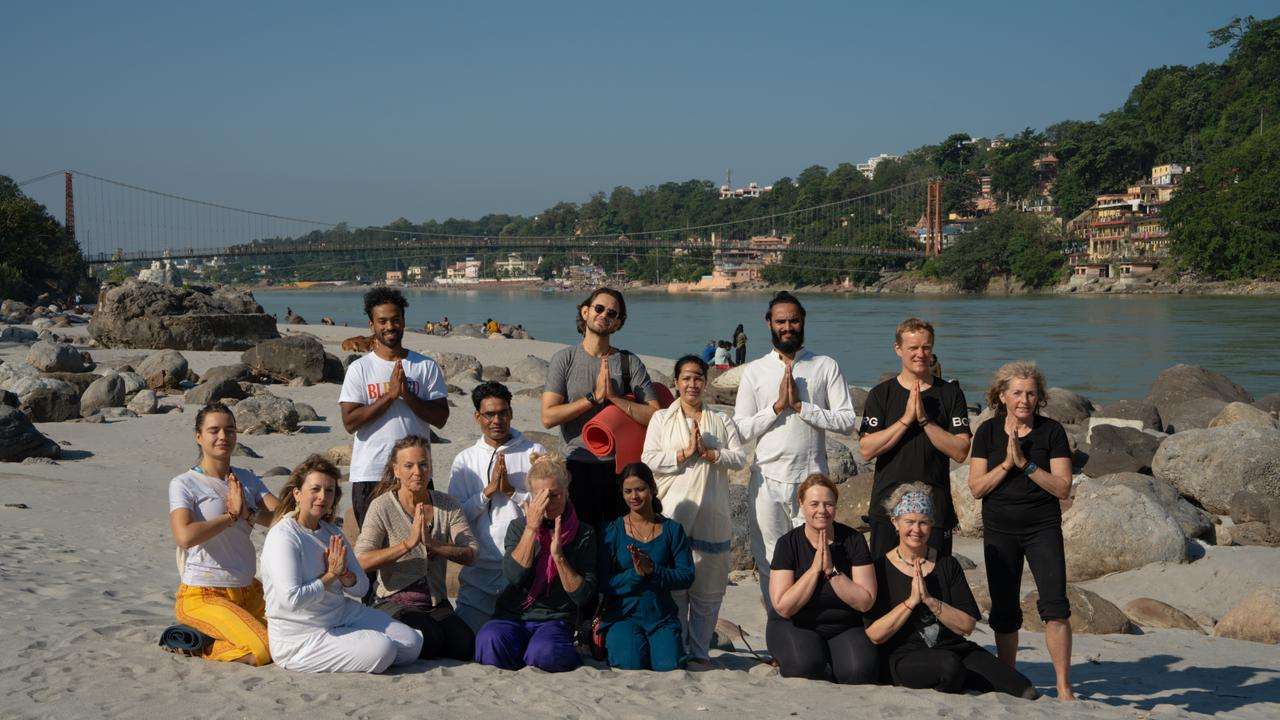
Yoga in Juvenile Justice: How We Build Programs That Interrupt the Pipeline and Restore Futures

Yoga in Juvenile Justice: How We Build Programs That Interrupt the Pipeline and Restore Futures
Every year, more than 700,000 young people pass through juvenile detention in the United States. Most are there for non-violent offenses. Most have experienced trauma. Most will struggle with emotional regulation, anxiety, and a nervous system locked in survival mode. And most—without intervention—will find themselves back in the system within three years.
We know the statistics. We know the stories. And we know that the current model isn't working.
But here's what else we know: nervous system tools work. Breathwork, movement, and mindfulness can give justice-involved youth what punitive structures alone cannot—a felt sense of safety, agency over their bodies, and pathways to self-regulation that replace violence with grounding.
Yoga isn't a cure-all. It isn't a replacement for systemic reform, trauma therapy, or the material support these young people desperately need. But it is a proven, accessible intervention that can meet kids exactly where they are—inside locked facilities or community programs—and offer them something radically different: the possibility that they can change their own state, that their body can be a place of refuge instead of a battlefield.
This is not a someday mission. Programs are already proving that yoga reduces aggression, improves impulse control, strengthens emotional literacy, and lowers recidivism. The question isn't whether it works. The question is: how do we scale this to reach every young person in the juvenile justice system?
Why Juvenile Justice Needs Yoga—Right Now
The System Is Failing Kids
Juvenile detention was designed, in theory, to rehabilitate. In practice, it too often retraumatizes. Many facilities operate more like prisons than healing environments. Kids are isolated, controlled, and subjected to punitive discipline that mirrors the chaos and unpredictability many experienced before they entered the system.
Most youth in detention have histories of:
- Physical, emotional, or sexual abuse
- Witnessing violence in their homes or communities
- Housing instability or homelessness
- Substance use in the family
- Undiagnosed or untreated learning disabilities, ADHD, and mental health conditions
These are not "bad kids." They are traumatized kids with dysregulated nervous systems who have never been given the tools to self-soothe, to pause, to choose a different response.
The Neuroscience Is Clear
Trauma reshapes the brain. Chronic stress keeps the amygdala hyperactive and the prefrontal cortex—the part responsible for decision-making and impulse control—underdeveloped. When a young person's system is constantly in fight-or-flight, rational choice becomes neurologically difficult.
Yoga intervenes at the nervous system level. Slow breathing activates the vagus nerve, calming the fight-or-flight response. Mindful movement builds interoception—the ability to notice internal states before they explode into action. Over time, these practices literally rewire the brain, strengthening areas responsible for emotional regulation and executive function.
In other words: yoga helps kids get out of survival mode so they can think, feel, and choose.
The Data Backs It Up
Pilot programs across the country have shown measurable results:
- A San Francisco juvenile hall program found a 34% reduction in rule violations among youth who practiced yoga regularly.
- A Massachusetts study showed improved mood, reduced anxiety, and better emotional control in adolescent boys after just 10 weeks.
- Research published in the Journal of Child and Family Studies found that yoga interventions reduced aggression and improved self-regulation in justice-involved youth.
- Programs in Oregon and New York reported that participants were better able to de-escalate conflict and had fewer incidents of physical violence.
These aren't soft outcomes. These are behavioral shifts that change trajectories.
The Current Gap—and What It's Costing Us
Despite the evidence, yoga remains rare in juvenile justice settings. Most facilities still rely solely on punitive discipline and talk therapy. Few staff members are trained in trauma-informed practices. And even fewer have access to somatic interventions.
Why the gap?
1. Funding
Most detention centers and community programs operate on razor-thin budgets. Bringing in outside instructors or training staff in yoga costs money that simply isn't allocated.
2. Perception
Administrators, judges, and policymakers often view yoga as "soft," a privilege rather than a necessity. There's still a belief that consequence and punishment are the only language justice-involved youth understand.
3. Lack of Trained Instructors
Teaching yoga in juvenile justice requires specialized training—trauma-informed approaches, cultural humility, de-escalation skills, and the ability to work within locked facilities with strict security protocols. Most yoga teachers aren't equipped for this environment, and most juvenile justice staff aren't trained in yoga.
4. No Systemic Integration
Even when programs exist, they're often short-term pilots funded by one-off grants. Without institutional buy-in, they disappear when the money runs out.
The result? Hundreds of thousands of young people cycling through a system that doesn't address the root cause of their behavior—and returning to the same conditions that got them there in the first place.
What's Possible: A Vision for Yoga in Every Juvenile Justice Program
Imagine a future where:
- Every youth entering detention receives an intake screening that includes nervous system assessment—and is immediately connected to daily yoga and breathwork.
- Facility staff are trained in trauma-informed yoga tools they can use during tense moments—grounding techniques, breath cues, short movement sequences—so regulation becomes part of the culture, not an add-on.
- Community-based diversion programs offer yoga as a core component, giving at-risk youth tools before they enter the system.
- Reentry programs include ongoing yoga classes, helping young people stay grounded as they navigate the stress of returning home, school, and probation requirements.
- Judges, probation officers, and social workers recognize yoga therapy as part of the continuum of care and actively refer youth to certified programs.
This isn't fantasy. It's already happening in pockets. We need to connect those pockets, fund them sustainably, and scale them nationally.
How We Build It: A Practical Roadmap
1. Train a Specialized Workforce
We need yoga teachers who are trauma-informed, culturally responsive, and comfortable in high-security environments. That means:
- Partnering with established yoga schools to develop or expand juvenile justice training tracks.
- Offering scholarships for teachers from communities most impacted by incarceration.
- Creating mentorship pipelines where experienced instructors support new teachers entering the field.
2. Embed Yoga Into Detention and Diversion Programs
Rather than one-off classes, we need integrated programs that include:
- Daily group yoga and breathwork sessions
- One-on-one yoga therapy for youth with complex trauma
- Training for facility staff so they can coach youth through regulation in real time
- Yoga as part of anger management, substance use, and violence prevention curricula
3. Build Partnerships With Juvenile Justice Administrators
Change doesn't happen without buy-in. That means:
- Presenting data in language that resonates with wardens, judges, and probation departments: reduced incidents, lower costs, improved outcomes.
- Offering free pilot programs so facilities can see the impact firsthand.
- Connecting juvenile justice leaders to yoga studios and teachers in their communities ready to serve.
4. Create Sustainable Funding Models
We need both short-term and long-term strategies:
- Grant-funded pilots through foundations focused on criminal justice reform, youth development, and mental health.
- State and county contracts that build yoga into the services juvenile justice departments are required to provide.
- Philanthropic partnerships where studios and individual donors sponsor programs in local facilities.
- A dedicated fund within Yoga Founders Network that redistributes contributions to high-impact juvenile justice programs.
5. Measure and Share Impact
Every program should track:
- Behavioral incidents (aggression, self-harm, rule violations)
- Participant self-reports (mood, stress, sense of control)
- Recidivism rates at 6, 12, and 24 months post-release
- Staff observations and facility culture shifts
Publish the data. Share the stories. Build the case for replication.
6. Extend the Work Into Reentry and Prevention
Justice-involved youth need continuity. That means:
- Connecting them to yoga studios in their neighborhoods offering sliding-scale or free classes.
- Training probation officers and reentry counselors to reinforce breathwork and grounding techniques.
- Building partnerships with community centers, Boys & Girls Clubs, and schools to offer yoga to at-risk youth before they enter the system.
Where You Come In: How Studio Founders and Teachers Can Lead This Work
You don't need to wait for a national policy shift. You can start now.
If You Run a Studio:
- Reach out to your local juvenile detention center or diversion program. Offer a free 8-week pilot. Bring a proposal, data from other programs, and a willingness to adapt.
- Train your teachers. Invest in trauma-informed and youth-focused professional development.
- Create a scholarship fund for justice-involved youth who've been released and want to continue practicing in your space.
If You're a Teacher:
- Get specialized training. Look for courses in trauma-informed yoga for youth, de-escalation, and working in institutional settings.
- Volunteer. Many programs are run by nonprofits that need skilled instructors willing to donate time.
- Advocate. Talk to your networks—social workers, educators, probation officers—about what yoga can do.
If You're a Founder or Leader:
- Use your voice. Write op-eds, speak at city council meetings, present to juvenile justice boards.
- Build coalitions. Partner with criminal justice reform organizations, youth advocacy groups, and mental health nonprofits.
- Fund the work. Dedicate a portion of your studio's revenue, workshop fees, or fundraising events to support juvenile justice yoga programs.
Why This Matters—For All of Us
When we invest in justice-involved youth, we're not just helping individuals. We're interrupting cycles of trauma, violence, and incarceration that ripple across families and communities.
Every young person who learns to regulate their nervous system is less likely to reoffend, more likely to finish school, more capable of building healthy relationships, and more able to become a stable, contributing member of society.
This isn't charity. It's systems change. And it's one of the highest-leverage interventions the yoga community can make.
Key Takeaways
✅ Juvenile justice youth are not "bad kids"—they are traumatized kids with dysregulated nervous systems. ✅ Yoga works. Evidence shows it reduces aggression, improves emotional control, and lowers recidivism. ✅ The gap is not evidence—it's funding, training, and institutional buy-in. ✅ We can build this now. Train specialized teachers, pilot programs in local facilities, measure impact, and scale. ✅ Studio founders and teachers are uniquely positioned to lead this work—starting in your own community.
Join the Movement
Yoga Founders Network exists to amplify this kind of mission-driven work. If you're teaching in juvenile justice, building a program, or want to start—you're not alone.
Find a yoga school offering trauma-informed youth training. Connect with studios already doing this work. Explore workshops to deepen your skills. And if you're ready to be part of the infrastructure that brings yoga to every young person in the justice system, join us.
List your studio, share your program, and help us map the movement that's proving—one breath, one kid, one facility at a time—that healing is possible, futures are not fixed, and yoga has a role in building the justice system we all deserve.
Let's build it together.